
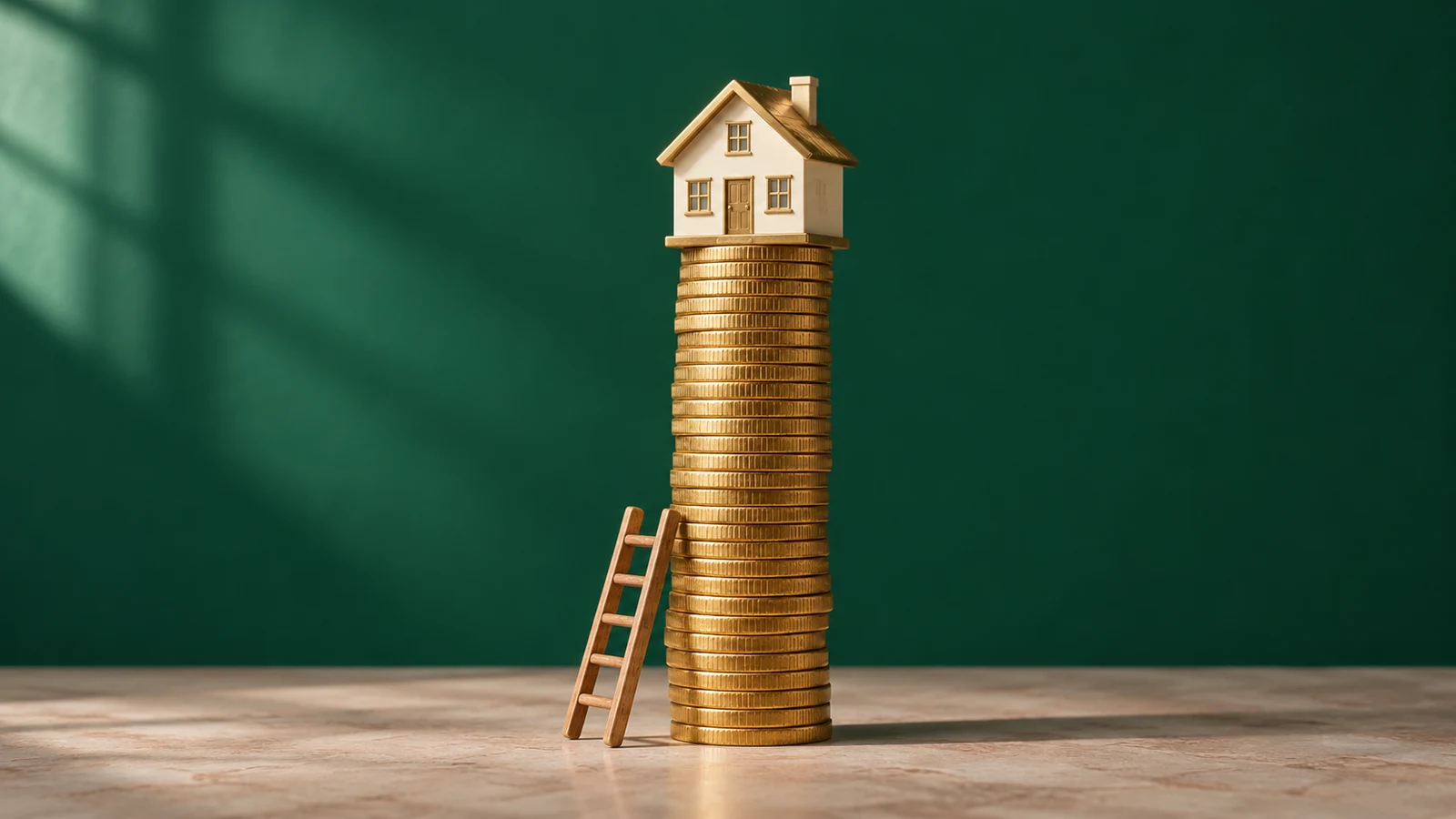
In short: Houses are expensive mainly because supply has not kept up with demand where people want to live. Zoning limits, construction costs and owners unwilling to give up low mortgage rates all restrict supply, while demand from households and investors has remained strong. In the US, the median home now costs nearly five times the median household income.
How expensive housing has become
The figures from Harvard’s Joint Center for Housing Studies give a clear picture. According to Enterprise Community Partners’ summary of the 2026 State of the Nation’s Housing report, the median US home price is nearly five times median household income, compared with an average of 3.2 through the 1990s. National prices have risen 54% since 2020, although appreciation slowed sharply to 0.4% last year.
Renters are under strain as well. A report summary in The Spokesman-Review says that about half of renter households, or 22.7 million, were cost-burdened in 2024, meaning they spent more than 30% of income on housing. Among homeowners, 24% were in that position.
Why supply is the central issue
Housing prices are set locally, by the balance between how many people want to live somewhere and how many homes exist there. In many cities, the second number grows far too slowly, for reasons that reinforce one another.
| Force | How it raises prices | How quickly it could change |
|---|---|---|
| Zoning and land rules | Limit what may be built and where | Slowly, and politically difficult |
| Construction costs | Raise the price of any new home | Depends on labor and materials |
| Too few new homes | Leave a backlog after years of underbuilding | Takes many years |
| Mortgage rate lock-in | Owners with low rates avoid selling | Fades gradually over time |
| Land value | Prices concentrate in desirable areas | Rarely falls without a downturn |
| Insurance, tax and upkeep | Add to monthly costs | Regional and rising |
Land-use rules. Minimum lot sizes, single-family zoning, parking requirements and lengthy approval processes all limit building, particularly in the highest-demand areas. Those rules often have local support, as existing owners benefit from scarcity and dislike change.
Building slowed for years. Construction fell sharply after the 2008 crisis and took a long time to recover. According to Smart Cities Dive’s coverage of the same Harvard report, single-family construction is down 7%, and multifamily building did not offset a sharp drop in 2024.
Lock-in. Homeowners who locked in very low rates are reluctant to move if it means taking a new mortgage at a higher rate. That keeps homes off the market, and existing-home sales were near three-decade lows, according to the Spokesman-Review’s summary.
What pushes demand up
Supply is only half the picture. Interest rates matter a great deal, since buyers think in monthly payments. When rates were very low, the same payment supported a much larger loan, and prices rose. Lower rates can therefore help individual buyers and yet raise prices for all of them, which is one of the odd features of how interest rates work.
Household formation drives demand too, as does the size of millennial cohorts entering their home-buying years. The Harvard report notes that this has lately slowed, with only 1.1 million new households formed in 2025, partly because of a weaker job market and student debt. Investors and second-home buyers play a role in certain markets, although their overall share is often overstated in public debate.
Are prices too high, or is this the new normal?
Both views have defenders. A high price-to-income ratio could signal a housing bubble, but a true bubble usually requires speculation and fragile lending. The present situation looks different in some respects: lending standards have been tighter since the 2008 crisis, and many owners hold substantial equity. Prices can still fall locally, and some regions have already seen declines.
What could improve affordability? Building more homes is the most common recommendation, though the Harvard report suggests that market-rate construction alone is unlikely to meet lower-income needs without public investment. Rising incomes help slowly, and lower rates help buyers in the short term. A sharp fall in prices would help buyers but hurt recent owners and possibly the wider economy, so few policymakers aim for it.
What this means for buyers and renters
Treat national headlines with caution, since local conditions vary widely. Decide on the basis of your own numbers and how long you plan to stay. Buying can make sense over a long horizon, but not necessarily at any price, and renting is not a waste of money if the monthly saving is invested. Remember to count taxes, insurance and maintenance, all of which have been rising.
For the wider view on what causes inflation and on the other forces at work, see how the economy works.
Frequently asked questions
Will house prices fall soon?
No one can say with confidence. Prices have fallen in some local markets and slowed nationally, but limited supply and locked-in owners may prevent a widespread crash without a severe economic shock. Be skeptical of confident forecasts, and base your decisions on affordability rather than on a prediction of where prices will go.
Why are new homes so costly to build?
Land, labor, materials, financing and regulation all contribute. In expensive markets, land and approval costs can make up a large share of the price, which pushes builders toward larger, higher-margin homes. Rules that require more land per home or long approval times add to that cost before construction even starts.
Do big investors cause high prices?
They can have a noticeable effect in particular neighborhoods and metro areas, especially for starter homes. Nationally, however, large institutional owners hold a small share of the housing stock. Most economists see restricted supply as the larger cause, although the local effects of investor buying are a legitimate concern.
Is it better to rent or buy right now?
It depends on local prices, rents, your likely time in the home, and your financial position. Buying has high upfront and exit costs, so short stays tend to favor renting. Compare the full monthly cost of owning with renting, and be sure you can still build savings under either option.
